Report Summary
Period covered 05 July – 01 August 2026
3 minute read
Note: This report summary is one or two months behind the current month as standard reporting practice. The content is indicative only and incomplete with certain data undisclosed. Become a member to access this data or take out a free 30 day membership trial now.
Online performance
Online retail sales rose by xx% YoY in July, comfortably ahead of the xx% increase recorded a year earlier although growth slowed after the double-digit rates seen in May and June.
Key drivers
Exceptional summer weather continued into July for a third consecutive month. By 10 July, 2026 had already recorded eight days above 34°C, more than any previous year, and was the first year on record to reach 35°C or more in May, June and July.
The trading effect was less pronounced than earlier in the summer, as much of the initial weather-related demand had already been brought forward during May and June.
The way consumers divided their spending between stores and websites also changed. Earlier in the summer, high temperatures had provided a considerable boost to online shopping as consumers avoided lengthy trips to physical destinations, but July saw more spending associated with holidays, days out and immediate purchases.
This was particularly apparent in clothing and footwear, where consumers shopping for holidays, summer occasions and last-minute essentials had greater reason to visit stores to shop.
Footfall rose xx% month-on-month in July, the strongest July increase for a decade. Online penetration eased from June to xx% but remained above the xx% recorded a year earlier.
The World Cup continued through the first half of July, with England's run to the semi-final creating major viewing occasions at home and in pubs.
Food, drink and entertainment benefited, but the tournament also encouraged consumers away from their normal shopping routines, particularly around match days.
Macroeconomic backdrop
Household finances came under renewed pressure in July as CPI inflation increased to xx% from xx% in June. The increase coincided with the xx% rise in Ofgem's energy price cap from 1 July, adding £xx a year to the typical dual-fuel bill.
Gas prices were xx% higher YoY and electricity prices increased by xx%, meaning a larger proportion of household income was once again being absorbed by essential costs.
Food provided some relief, with inflation easing to xx%, its lowest rate since September 2021, but much of the benefit was being absorbed elsewhere. Higher energy bills, mortgage costs and other fixed expenses continued to limit the improvement in disposable income available for non-essential purchases.
The Bank of England kept Bank Rate at xx% in July, with three members of the Monetary Policy Committee voting for an increase to xx%.
Mortgage pricing edged higher again during July, increasing the pressure on households refinancing onto more expensive deals and prospective buyers, carrying particular significance for categories containing higher-value purchases.
Conditions in the housing market offered little support to those larger purchases, with annual house price growth slowing to xx% in July, according to Lloyds.
Mortgage approvals ticked up but remained around xx% below June 2025 levels. Fewer moves mean fewer of the purchases normally associated with setting up or improving a home, which leaves furniture, larger electricals and other household goods competing for demand from consumers who have less urgency to spend.
The labour market also softened further. Early estimates showed payrolled employment falling by xx YoY in July, including a xx decline across wholesale and retail, while unemployment stood at xx% in the three months to June and vacancies remained around a five-year low.
Wage growth continued to run ahead of inflation, so real earnings were still increasing, but the margin has narrowed.
Consumer confidence provided the more encouraging part of July's economic picture. GfK's headline measure rose six points to xx, its largest monthly improvement since November 2023, while expectations for personal finances over the coming year moved into positive territory at xx. The Major Purchase Index also increased eight points to -xx, its strongest reading since December 2024.
Take out a FREE 30 day membership trial to read the full report.
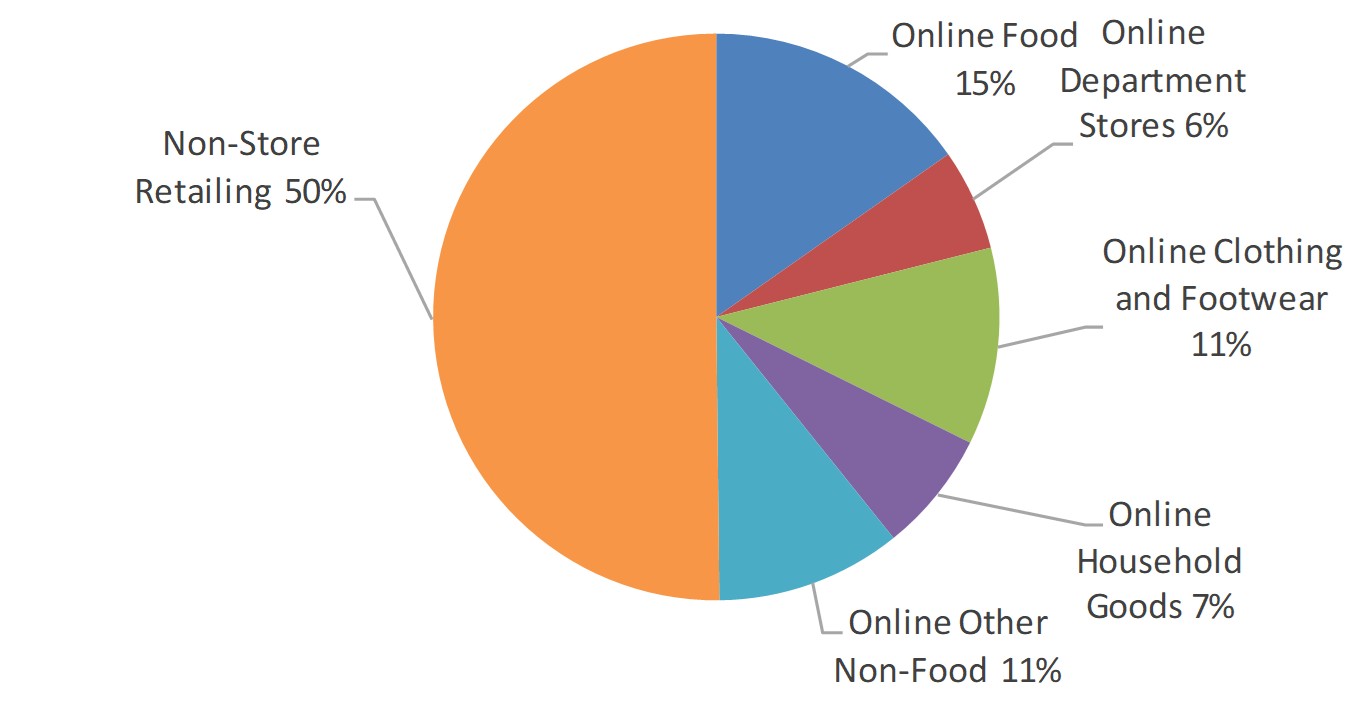
Proportion of online retail sales by category (Period aligned to ONS trading calendar –05 July – 01 August 2026 )
 Source: ONS, Retail Economics analysis